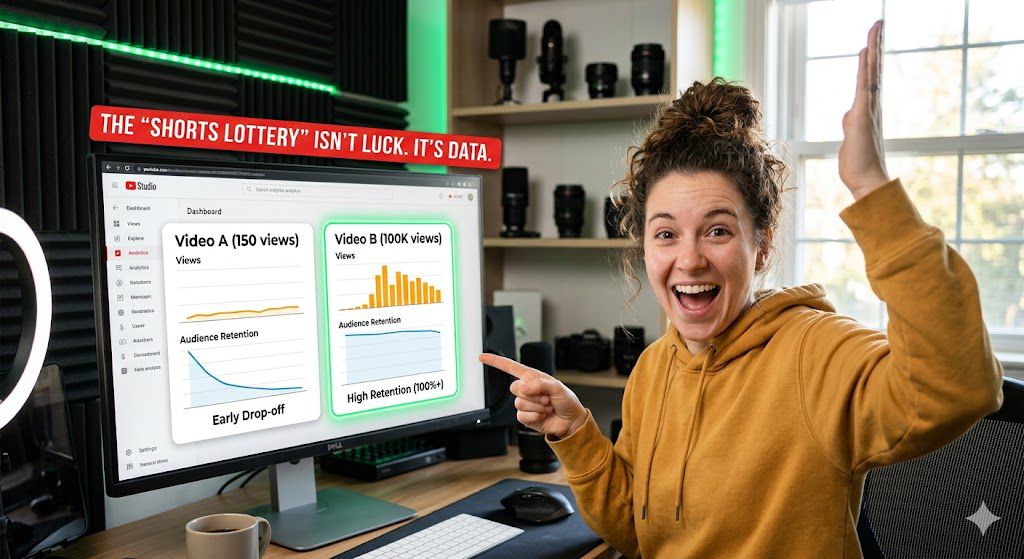
Most creators treat YouTube like a digital television network. They upload a video, cross their fingers, and hope the “algorithm gods” smile on them. But to build a highly repeatable channel that generates passive views month after month, you have to treat it like what it actually is: the world’s second-largest search engine.
Every single second, millions of users type highly specific queries into that top search bar looking for immediate answers, inspiration, or entertainment. If you aren’t optimizing for those queries, you are leaving free traffic on the table.
However, if you are still optimizing your videos the same way people did five years ago, you are actively burying your content.
YouTube SEO has officially moved past its infancy. The days of simple “keyword stuffing”—where you could rank a video simply by copy-pasting your target phrase twenty times in the description box, tags, and hidden metadata—are completely over.
In 2026, the algorithm operates on an advanced semantic and behavioral flywheel. It doesn’t just scan for exact text matches; it actively pairs viewer intent with human behavior.
Here is exactly how that algorithmic flywheel functions today:
- Advanced Natural Language Processing (NLP): YouTube’s AI doesn’t just read your title; it listens to your video. It parses your automatically generated transcript, evaluating the exact vocabulary, pacing, and context of your script. If your thumbnail says one thing but your spoken words say another, the system flags the disconnect instantly.
- The Intent-Behavior Loop: YouTube tracks how satisfying your video is for a specific search query. If a user types “how to edit videos fast” and clicks on your video, the algorithm looks at what happens next. Do they watch for 5 minutes, or do they bounce back to the search results page within 12 seconds to find a better answer?
- The Ultimate Ranking Signal: Your technical optimization (titles and descriptions) gets you onto the playing field. But your behavioral optimization—how effectively you satisfy user intent, capture immediate attention, and keep viewers on the platform—is what actually forces the algorithm to lock your video into the #1 spot
At the end of this guide, you’ll have a step-by-step checklist to outrank bigger channels and unlock consistent, passive search traffic.
1: High-Intent Keyword Mining (Finding the Right Targets)
If you start creating a video before you know exactly what your audience is typing into the search bar, you are gambling with your channel’s growth.
Most creators fail at YouTube SEO because they target keywords that are far too broad. If you have a small or medium-sized channel and try to rank for massive, generic terms like “Video Editing” or “Make Money Online,” you are throwing your content into a meat grinder against channels with millions of subscribers and established authority.
To win the search game, you need to mine for high-intent, long-tail keywords—specific phrases typed by users looking for a precise solution. When you target the right intent, you bypass the heavy competition and get your videos directly in front of an audience that is ready to watch.
Here is the exact 3-tier strategy to uncover these hidden traffic goldmines
The 3-Tier Keyword Mining Strategy
Tier 1: The Seed (Your Core Topic)
Start with a broad, one- or two-word phrase that represents the core theme of your channel or upcoming video idea.
Examples: “YouTube,” “CapCut,” “Affiliate Marketing.”
The Reality: You will not try to rank for this word. This is simply the starting point to feed the research engine.
Tier 2: The Extension (Long-Tail Phrases)
Next, you want to see how real humans expand on that seed keyword when they are looking for specific help. The absolute best tool for this is completely free: YouTube Autocomplete.
Go to the YouTube search bar, type in your Tier 1 Seed phrase, and hit spacebar. Do not press enter. Look at the drop-down menu that appears. Because YouTube’s search engine is built on predictive behavior, those 8 to 10 suggestions aren’t random—they are the exact, high-volume phrases that thousands of real users are actively typing right now.
Pro-Tip: Use the “Wildcard” trick. Type an underscore (_) before or between your keywords (e.g., _ for YouTube automation or how to edit _ on CapCut). YouTube will automatically fill in the blanks with hidden search terms you likely never thought of.
Tier 3: The Golden Filter (Extracting Low-Competition Wins)
Now, take your long-tail phrases and pass them through a data filter using tools like VidIQ or TubeBuddy. You are looking for phrases that meet two strict criteria:
Search Volume: Medium to High (People are actively looking for it).
Competition Score: Low to Very Low (Other channels haven’t made specific, high-quality videos answering this exact query yet).
Instead of targeting “YouTube Automation,” the Golden Filter will guide you toward: “Faceless YouTube automation channel ideas for beginners” or “YouTube automation script writing tutorial.”
Action Step: The “Accidental Traffic” Audit
Before you even look for new keywords, check to see what you might already be ranking for.
Open your YouTube Studio, head to Analytics, click on the Content tab, and scroll down to “How viewers find your videos” -> YouTube Search.
Look at the exact terms driving traffic to your channel. Frequently, you will find users are finding your videos via a keyword you didn’t even optimize for. When you spot an accidental traffic gem, make a dedicated follow-up video targeting that exact phrase. You already know your channel has semantic authority for it, making it an incredibly easy ranking win.
Pillar 1: High-Intent Keyword Mining (Finding the Right Targets)
If you start your YouTube SEO strategy by guessing what people are searching for, you’ve already lost.
The biggest trap that kills small and medium-sized channels is targeting broad, high-volume keywords. If you name your video “Video Editing Guide” or “How to Make Money Online,” you are stepping into a digital colosseum against legacy creators who have millions of subscribers, massive authority scores, and thousands of backlinks. You will be buried on page twenty before the algorithm even has a chance to index your thumbnail.
To outrank the giants, you need to mine for high-intent keywords. These are highly specific, multi-word phrases typed by users who are looking for an exact solution right now.
Here is the exact three-tier data-mining framework you can use to find golden, low-competition targets.
The 3-Tier Keyword Mining Framework
Tier 1: Identify The Seed Keyword
Start with your core topic. This is a broad, 1-to-2-word phrase that describes your niche or video concept.
Examples: “CapCut Tutorial,” “YouTube Automation,” “Football Betting.”
The Rule: You will not use this as your main target. This is simply the starting point to feed the research engine.
Tier 2: Uncover Long-Tail Phrases via YouTube Autocomplete
The absolute best indicator of real-world user demand isn’t a premium third-party tool—it is YouTube’s own search bar.
Go to YouTube in an incognito window, type in your Seed Keyword, and do not press enter. Look at the dropdown menu. YouTube is literally handing you a list of the exact phrases people are actively typing into the platform right now.
To take this a step further, use the “Alphabet Soup” method. Type your seed keyword followed by the letter “a”, then “b”, then “c” (e.g., “YouTube automation a…”, “YouTube automation b…”). Write down every long-tail variation that perfectly matches a video you can actually produce.
Tier 3: Apply The Golden Filter
Once you have a list of long-tail phrases, you need to filter them for high intent and low competition. Look for phrases that contain four or more words. These phrases tell you exactly what the viewer wants to achieve.
Low Intent: “Faceless YouTube video” (The user is just browsing or curious).
High Intent: “How to write a script for a faceless YouTube video fast” (The user is actively working on a project right now and needs an immediate step-by-step guide).
When a user searches for a highly specific, multi-word phrase, the total search volume might be smaller, but the conversion and click-through rates are astronomical. If your video gives them the exact answer they are looking for, they will watch it to the end.
The Smart Creator’s Data Toolkit
While manual research via autocomplete is incredibly powerful, you can accelerate the process with targeted software data:
VidIQ & TubeBuddy: Use their search companion extensions to check the “Competition Score” for your long-tail keywords. Look for phrases where the search volume is amber/green (medium to high) but the competition score is deep green (low).
The “Accidental Traffic” Report: If you already have an active channel, open your YouTube Studio Analytics, click on Research, and navigate to Your Viewers’ Searches. Alternatively, look at the YouTube Search Terms report under the reach tab of your existing videos. Look for weird, hyper-specific search queries that are driving traffic to your channel by accident. These are immediate validation indicators telling you exactly what topic to build an entire dedicated video around next.
By mining for high-intent long-tail phrases, you bypass the crowded, competitive highway and build a direct, high-converting pipeline straight to your target audience.
Pillar 2: Perfect On-Page Metadata (Feeding the Algorithm)
You can mine the most profitable keywords on the internet and write a flawless, metadata-rich description. But if nobody clicks your video—or if they click it and immediately run for the exit—all that technical optimization is completely worthless.
In the modern YouTube landscape, your Click-Through Rate (CTR) and Watch Time are the ultimate validation metrics. Think of your metadata as the invitation; CTR and Watch Time are proof that the party is actually worth attending. If these two metrics fail, the algorithm interprets your video as an irrelevant search result and buries it.
Here is how to optimize for both the click and the stay.
1. YouTube Titles: Your 60-Character Sales Pitch
Your title carries the heaviest weight for search indexing, but it also dictates your Click-Through Rate (CTR). This means your title has to serve two masters: the algorithmic robot and the human scroller.
The Front-Loading Rule: YouTube mobile apps and desktop search results truncate titles after roughly 50 to 60 characters. If your core keyword is at the very end, it gets cut off. Always place your exact primary keyword within the first 40 characters.
The Keyword-Hook Balance: Don’t just write a dry, robotic keyword string. Use the “Keyword + Curiosity Gap” formula to satisfy the algorithm while enticing the human click.
2. The Description Box: Building the Context Map
Most creators waste their description box by pasting three social media links and a generic paragraph. This is a massive missed opportunity. YouTube allows you 5,000 characters here for a reason—it uses this text to build a semantic profile of your video.
The “Above the Fold” Real Estate: The first 100 to 125 characters of your description are the most important. This snippet appears directly in YouTube search results underneath your thumbnail. Ensure this first sentence includes your primary keyword or a close Latent Semantic Indexing (LSI) variation naturally.
The 250-Word Semantic Overview: Treat your description like a mini-blog post. Write a 200 to 300-word breakdown explaining what the video covers. Don’t repeat your main keyword fifty times; instead, use related, natural variations. For a video about “YouTube SEO Tips,” your description should naturally use phrases like “video ranking strategies,” “optimizing metadata,” and “YouTube search algorithm.”
3. The Hidden Data Fields: Scripting and Raw File Assets
The search engine looks far deeper than just the fields you type into on the upload screen. True optimization starts on your hard drive and within your video script itself.
The Raw File Name Trick: Before you upload your video file to YouTube, rename the asset on your computer. Change it from a generic export string like Final_Render_V4_Edit.mp4 to your exact target keyword phrase using hyphens: youtube-seo-tips.mp4. Do the exact same thing for your thumbnail image file (youtube-seo-tips.jpg). This plants a permanent, unchangeable marker in the backend metadata.
Optimizing the Audio Track (Spoken Keywords): Because YouTube automatically transcribes your audio to generate closed captions, its AI scans the text of everything you say. If you don’t actually say your main keyword out loud in the video—especially within the first 30 seconds—the algorithm perceives a mismatch. Make it a hard rule to state your video’s core topic clearly right out of the gate.
4: The 48-Hour Velocity Flywheel (Engagement Signals)
Technical SEO (your keywords, metadata, and automated transcripts) places your video into the search index. But the 48-Hour Velocity Flywheel determines exactly where it stays.
When you publish a new video, the algorithm monitors its performance over the first two days to determine initial search and browse rankings. Think of this phase as a stress test. The algorithm tracks the speed and intent behind early viewer interactions to decide if your content deserves top positioning.
In 2026, the algorithm has shifted away from superficial “likes” to focus on high-quality, high-effort user signals. To trigger this velocity flywheel, implement three primary behavioral systems immediately after uploading.
1. Spark the “Thought-Based” Comment Loop
Mass keyword stuffing is a relic of the past; the current algorithm values comment depth and context. If a viewer leaves a 4-word generic response like “Great video, thanks mate!”, it signals low conversational value. If they write two sentences using variations of your target keywords, the algorithm recognizes high topical relevance and viewer satisfaction.
The Blueprint: Do not use broad phrases like “Let me know what you think below.” Instead, give the viewer an effortless question to answer. For a video about video editing, ask: “Are you currently editing on CapCut or Premiere Pro, and what is your biggest bottleneck?”
The Velocity Action: Within the first hour of uploading, post a pinned comment featuring this question to drive responses. Reply to every single comment during the first 48 hours to create a dual engagement signal, indicating an active, growing community space.
2. Force Session Continuation (The Ultimate Ranking Metric)
YouTube wants to keep users on its platform as long as possible. If your video causes a viewer to close the app or return to their homepage, it receives a negative session score. However, if your video acts as a bridge that guides them to another video, the system rewards your search ranking significantly.
To maximize this, use End Screens and Interactive Cards strategically. Rather than offering three different options at the end of a video, present one clear next step. Use a bridge phrase like: “Now that your keyword research is complete, watch this video next to master thumbnail design.” This behavior keeps the user locked into your ecosystem.
3. Track Your “CTR Drop-Off” Window
The velocity flywheel relies heavily on Click-Through Rate (CTR) data. When a video is brand new, YouTube exposes it to your most dedicated audience, which typically results in a healthy CTR (6–10%). Over the next 24 to 48 hours, the system expands that reach to broader, colder audiences. If your CTR drops sharply below 3–4% during this window, the algorithm will begin reducing its visibility. Monitor your real-time analytics closely. If impressions are rising but your CTR is actively tanking, treat it as an immediate signal to swap out your thumbnail or adjust the curiosity gap in your title before the 48-hour velocity window closes.This video analyzing the 2026 YouTube Algorithm Strategy provides an excellent breakdown of how systems like Gemini AI process spoken context and long-form retention rather than simple text metadata.
Conclusion
Mastering YouTube SEO isn’t about trying to trick a computer program. It is about understanding that the algorithm is simply a mirror of human behavior. By shifting your focus from broad keyword stuffing to high-intent keyword mining, clear metadata, and absolute viewer satisfaction, you transform your channel from a lottery ticket into a predictable search engine flywheel.
Technical optimization gets you onto the playing field, but keeping the viewer engaged is what keeps you at the top.